Tiny Snipers Movement Guide
Jump pads, wall jumps, furniture routes, and surviving live map chaos.
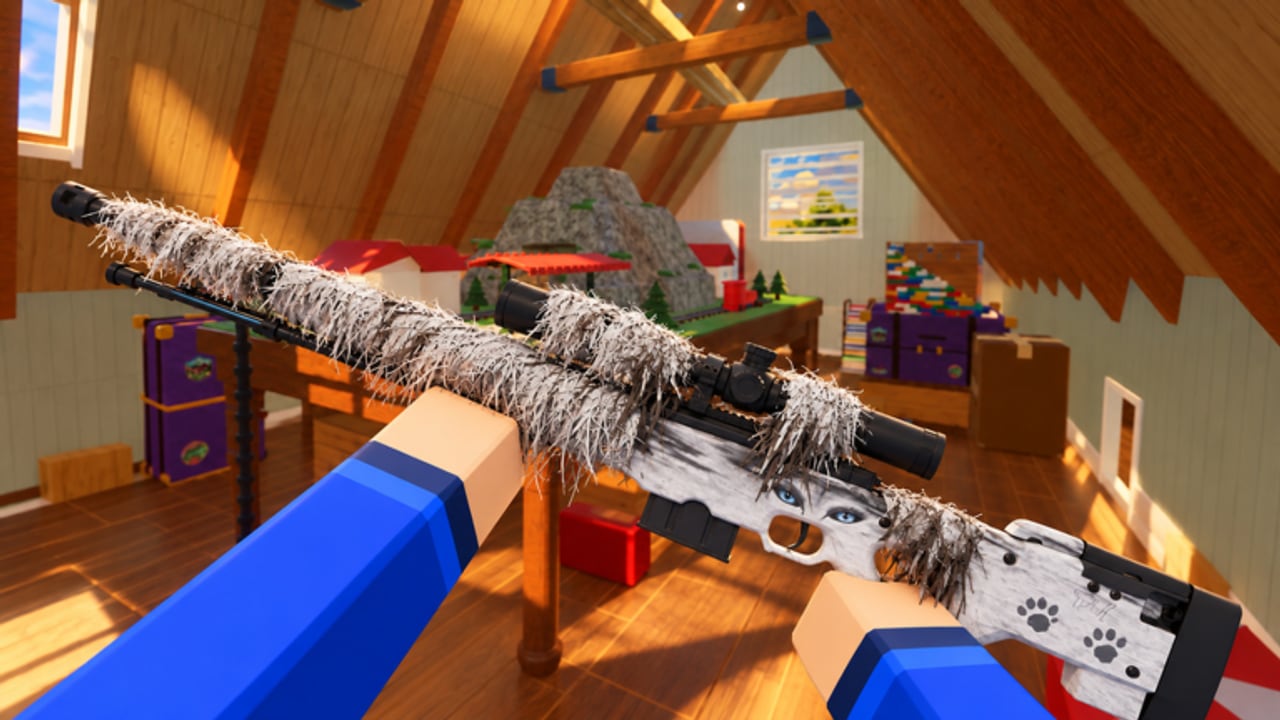
Movement is the second half of Tiny Snipers gunfight math. Aim wins open peeks; movement decides whether you ever get those peeks — or whether a knife finds you under the coffee table. This guide covers jump pads, wall jumps, house-scale traversal across living room, dollhouse, and attic, plus how to move when live events rewrite the map. Warm up controls first with Controls, then drill the techniques below in casual FFA before taking them into Ranked.
Why movement matters in six-player servers
With only six players, everyone hears and sees more of the map. Static snipers get flanked. Floor runners get farmed from chair backs. The players who chain pads into wall jumps into unexpected nests create crossfires that feel unfair even when their aim is average. Treat every death as a pathing review: could a pad, beam, or wall jump have denied that angle?
Jump pads — offense and escape
Jump pads are loud vertical tickets. Use them with intent.
Offensive pad use
- Launch onto a shelf or sofa back the enemy is not watching.
- Time landings so your crosshair is already near head height — see sensitivity notes in Controls.
- Pad into a knife if you know someone is camping a crawlspace (pair with Knife Combat).
Defensive pad use
- Escape a lost duel before the second shot lands.
- Break line of sight during Team Deathmatch rotates.
- Relocate instantly when a live event makes your nest worthless.
Pad mistakes
- Riding the same pad every life — lobbies learn your spawn theater.
- Launching while already scoped and blind to mid-air threats.
- Landing on open tabletops with no exit plan.
Drill: spend a full match only taking fights after a pad or wall-jump reposition. Your K/D may dip; your path library will grow.
Wall jumps — chaining height
Wall jumps let tiny fighters climb furniture faces, dollhouse exteriors, and attic supports that look unreachable from the floor. Core ideas:
- Approach with speed; timid taps often fail to stick.
- Jump toward the surface, then jump again at contact timing — learn the rhythm in empty space before fighting.
- Chain wall jump → ledge → second wall jump when maps allow multi-tier climbs into the attic.
- Mix left and right wall contacts so enemies cannot pre-aim a single ascent lane.
Wall jumps are also information tools. Even a failed climb draws eyes; teammates in TDM can trade the watcher. In Duels, a sudden wall climb can break a stalemate on mirrored sofa angles.
Map traversal by area
Living room
Think highways and balconies. Sofa arms, TV stands, and carpet lanes create predictable floors — leave them. Prefer elevated routes along chair rims and shelf lips. Jump pads often connect floor to mid furniture; wall jumps finish the climb to lamp or frame nests. Full nest notes live in Maps and Maps and Positions.
Dollhouse
Tight rooms punish wide swings. Move room-to-room along exterior ledges when possible, then drop through windows for knife swings. Wall jumps on outer walls beat walking the dollhouse hallway into a pre-aim. Gun Game here is chaos — keep a pad exit in mind at all times.
Attic
Beams and boxes favor players who can leave the floor. Wall jump onto beams, then walk quiet lines above contested crates. Falling is death; practice controlled drops near pads so you can re-ascend after a chase. Storms and lights-out hit attic sightlines hard — move slower, listen more.
Live-event movement
Tiny Snipers live maps can introduce:
- The cat walking into the space — treat the cat as moving cover and moving threat geometry. Do not stand in its path. Use the distraction to rotate pads while others stare.
- Storms — visibility and audio change; favor short hops between hard cover instead of long mid-air pad hang time.
- Lights out — darkness destroys lazy peeks. Pre-learn two dark routes per area that rely on muscle memory wall jumps, not visuals alone.
When an event starts mid-round, abandon vanity nests. The first players to relocate onto event-proof paths win free picks on stubborn campers. Watch Updates for new event twists each season.
Movement in each mode
- FFA — constant relocation; never farm the same pad twice in a row.
- TDM — move as a unit concept: one player pads high while the other holds mid, then swap.
- Gun Game — movement covers weak weapons; pad away when your current gun loses close range.
- Weekly party — read the rule modifier first; some parties amplify mobility, others punish it.
- Duels — movement is mind games; show a pad fake, then wall jump the opposite side.
- Ranked — consistency beats flash. Save circus routes for when you already lead the round.
Mode priorities also appear on the Modes tier list.
Combining movement with gun and knife
Ideal fight flow:
- Approach from an unexpected height using pad or wall jump.
- Take a headshot peek from the new nest.
- If the enemy closes, drop or slide into knife range with a short strafe pattern.
- If the trade looks lost, pad out immediately — ego is how Bronze players stay Bronze.
Coins still tick while you play smart. Stack VIP and friends bonuses from Coins and Cases during movement practice sessions so warm-up games still progress cosmetics.
Practice plan (30 minutes)
- Five minutes empty traversal: hit every pad you can find, land clean.
- Five minutes wall-jump climbs to attic or tall living-room props.
- Ten minutes FFA with a rule: no floor-only fights.
- Five minutes lights-out or low-sensitivity tracking while moving.
- Five minutes Duels focusing on pad fakes.
Repeat this plan after reading Getting Started rewards so early Coins are claimed, then graduate to ranked climb guides. Browse the full Guides Hub whenever a patch adds new pads or props. Official destinations stay on the Links Hub.
Movement mastery is quiet. Spectators notice the clip; ranked opponents notice they never get a clean angle on you. Be the player who is already gone when the scope lands.
Frequently Asked Questions
Quick answers for Tiny Snipers players.
What movement tools does Tiny Snipers include?
Jump pads and wall jumps are core, alongside standard jumps and strafes across living room, dollhouse, and attic props.
Should I use jump pads every fight?
No. Pads are commitments. Mix them with wall jumps and ground strafes so lobbies cannot pre-aim your favorite launch.
How do live events change movement?
The cat, storms, and lights out alter cover and visibility. Relocate early and prefer short, memorized routes over long airtime.
Is movement different in Ranked?
Ranked favors consistent, readable-to-you routes over flashy repeats. Use Duels to practice fakes, then keep ranked pathing tidy.
Where should I practice wall jumps?
Warm up on tall living-room furniture and dollhouse outer walls in FFA before relying on attic beam chains in Ranked.